
Buy best refrigerated containers for sale
Our refrigerated containers for sale maintain precise temperatures from minus thirty to plus fifty degrees Celsius, protecting your perishable cargo. Built with CFC free foam and robust steel, these units guarantee uninterrupted cold chain logistics across the united states.
Buy best refrigerated containers for sale in united states
When businesses need to transport or store temperature sensitive cargo, standard steel boxes fall short. We provide refrigerated containers for sale that safeguard your perishable goods from farm to table, or factory to pharmacy. Maintaining the cold chain is a strict requirement for food safety and pharmaceutical integrity. A single temperature excursion can ruin an entire shipment, costing thousands of dollars and compromising safety. Our reefer units eliminate that risk.
We understand that securing reliable cold storage is a high stakes decision. You need equipment that performs flawlessly in the scorching heat of Arizona or the freezing winters of Minnesota. Our inventory of shipping containers includes top tier reefers engineered for durability, energy efficiency, and precise climate control. Whether you run a large scale distribution center or a local catering business, we have the right unit for your needs.
What is a refrigerated container?
A refrigerated container is a specialized shipping box designed to maintain specific temperatures, keeping perishable cargo frozen or chilled during transit and storage.
Unlike a standard 20ft shipping container, a reefer integrates a cooling unit, often manufactured by Carrier or Thermo King, connected to the steel structure. The walls, floor, and doors contain thick insulation, usually polyurethane foam, which traps the cold air inside. The floor features a T shaped grate system that allows chilled air to circulate evenly from the bottom up, ensuring every corner of the container remains at the exact set temperature.
Renting Refrigerated Containers Selecting Refrigerated Containers to Meet Your Needs
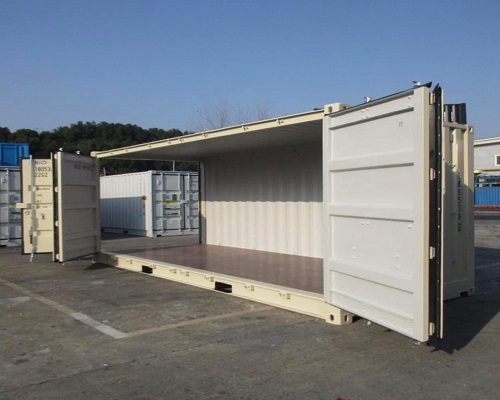
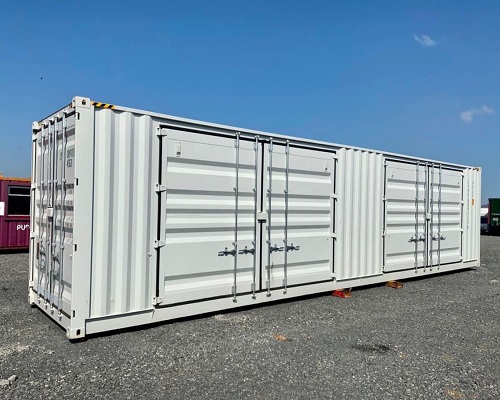
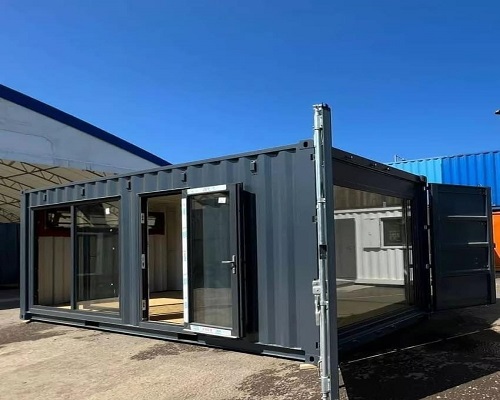
Refrigerated Containers for Rent Types and Specifications for Your Customized Solutions
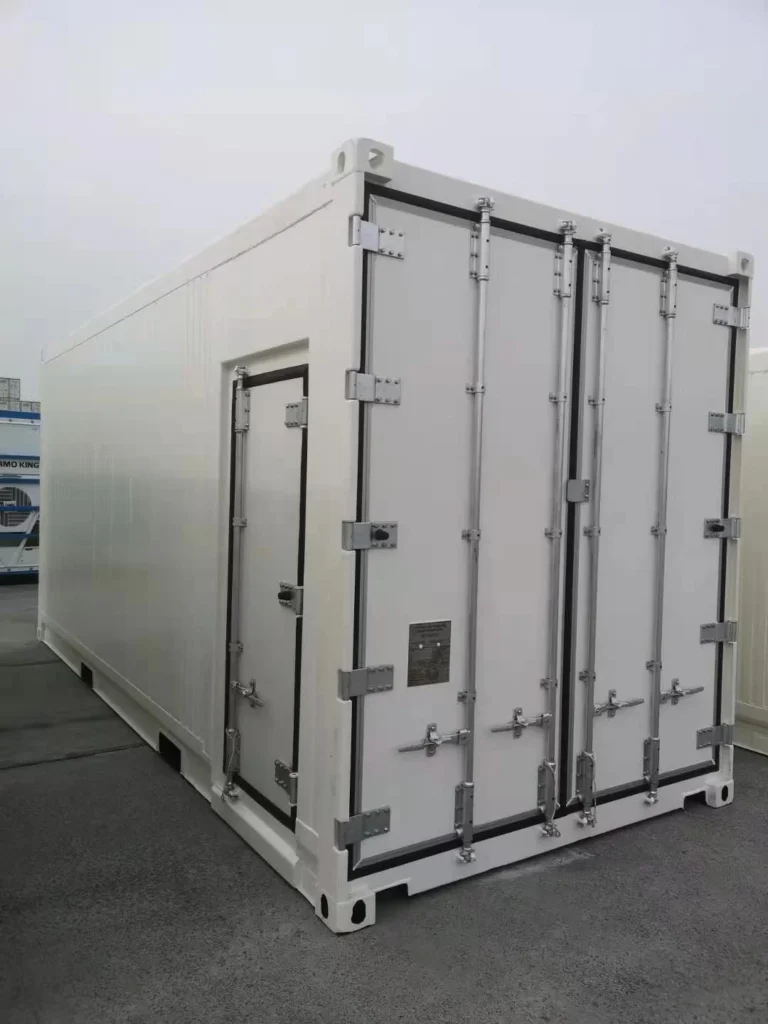
20′ High Cube Refrigerated Container With Side PA Door
The 20′ High Cube Refrigerated Container with Side PA Door is an efficient solution for businesses needing controlled temperature storage. It offers ample space while maintaining precise temperature levels necessary for perishable goods. The side PA door enhances accessibility, allowing for easy loading and unloading of items without disrupting the internal climate. This container is ideal for industries such as pharmaceuticals, food and beverage, and biotechnology, where maintaining consistent and regulated temperatures is crucial for preserving product integrity and quality throughout transport and storage.
Features
- L 20’ x W 8’ x H 9’6”
- Carrier machine with max. capacity of -35°C (-31°F) to 30°C (-86°F)
- Proper insulation
- Side Personal Access (PA) Door
- Rubber-sealed doors
- T-bar flooring
- Locking bars
- Forklift pockets
- Corner castings
Specifications
| External dimensions | L 20’ x W 8’ x H 9’6” | L 6 m x W 2,4 m x H 2.9 m |
| Volume | 1.137 cu ft | 32.2 m³ |
| Tare weight | 6.878 lbs | 3.120 kgs |
| Max payload | 60.320 lbs | 27.360 kgs |
| Max cargo | 67.200 lbs | 30.480 kgs |
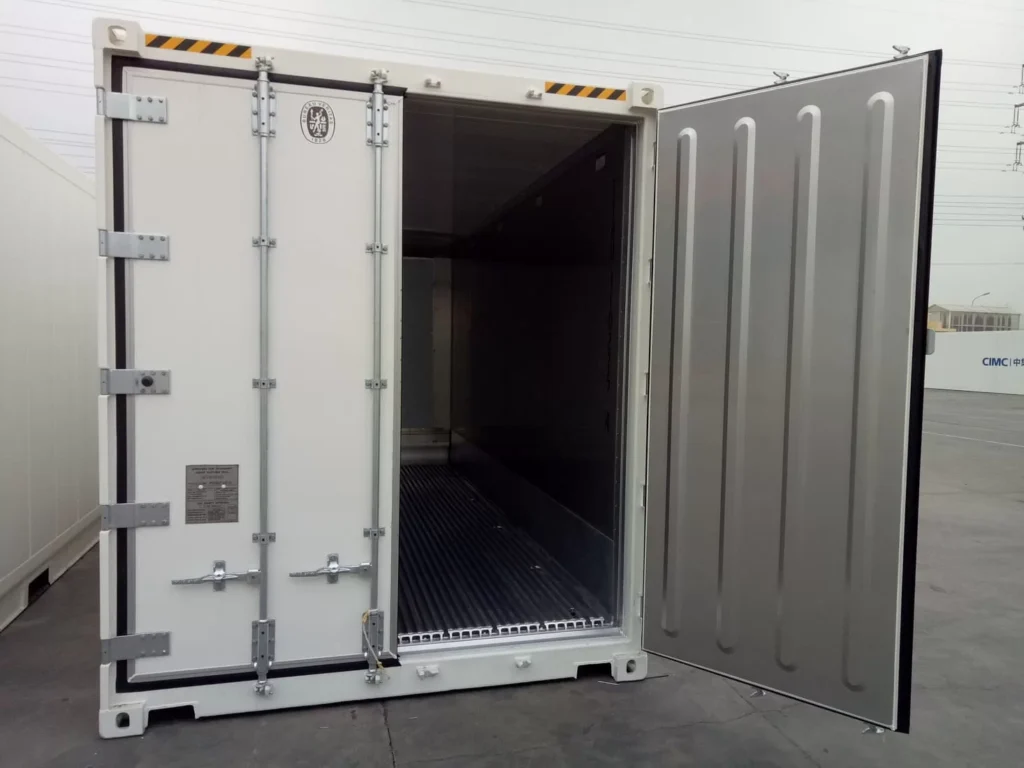
20′ High Cube Refrigerated Containers (Carrier Primeline)
The 20′ High Cube Refrigerated Containers, specifically the Carrier Primeline models, are renowned for their exceptional performance in temperature-controlled logistics. These containers are equipped with state-of-the-art Carrier refrigeration units, known for their reliability and efficiency in maintaining precise temperature settings. With a spacious interior and advanced insulation, they provide ample storage capacity while ensuring consistent and uniform cooling across all stored goods. The Carrier Primeline series is favored by industries such as pharmaceuticals, food processing, and biotechnology, where maintaining product integrity during transport and storage is critical. These containers are also versatile, suitable for both long-distance shipping and temporary storage needs, offering businesses a dependable solution for preserving perishable items under varying environmental conditions.
Features
- L 20’ x W 8’ x H 9’6”
- Carrier Primeline Engine
- Rubber Sealed Doors
- Proper insulation
- T-bar flooring
- Locking bars
- Forklift Pockets
- Corner castings
Specifications
| External dimensions | L 20’ x W 8’ x H 9’6” | L 6 m x W 2,4 m x H 2.9 m |
| Volume | 1.141 cu ft | 32.3 m³ |
| Tare weight | 6.570 lbs | 2.980 kgs |
| Max payload | 60.630 lbs | 27.500 kgs |
| Max cargo | 67.200 lbs | 30.480 kgs |
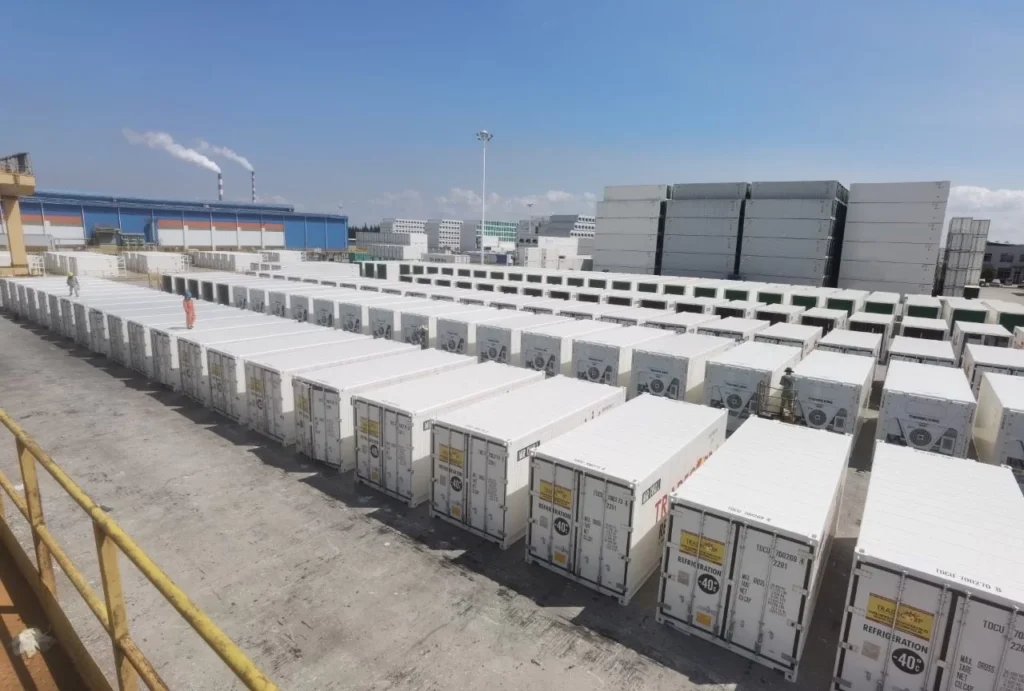
20′ Refrigerated Container (Thermo King Magnum+)
The 20′ Reefer Containers (Thermo King Magnum+) is a robust and efficient solution for businesses requiring reliable temperature-controlled storage. Equipped with Thermo King’s advanced refrigeration technology, these containers excel in maintaining precise temperature settings essential for preserving perishable goods during transport and storage. The Magnum+ model offers a spacious interior layout that maximizes storage capacity while ensuring consistent cooling performance across the entire cargo. Ideal for industries such as pharmaceuticals, food distribution, and biotechnology, these containers are designed to withstand varying environmental conditions and provide superior insulation to safeguard product quality and integrity. Whether used for long-haul transportation or on-site storage, the Thermo King Magnum+ is a trusted choice for businesses seeking dependable refrigeration solutions. Brand-new units often come equipped with additional features such as a CSC plate for compliance, integrated GPS tracking systems, and customizable door options to meet specific operational needs. These enhancements not only ensure regulatory compliance and security but also enhance operational efficiency and flexibility for businesses requiring reliable and modern shipping container solutions.
Features
- L 20’ x W 8’ x H 8’6”
- Thermoking Magnum+ engine (-40°C up to +40°C / -40°F up to +104°F)
- Rubber-sealed doors
- Proper insulation
- T-bar flooring
- Locking bars
- Forklift pockets
- Corner castings
Specifications
| External dimensions | L 20’ x W 8’ x H 8’6” | L 6 m x W 2,4 m x H 2.6 m |
| Volume | 1.003 cu ft | 28.4 m³ |
| Tare weight | 6.220 lbs | 2.820 kgs |
| Max payload | 60.980 lbs | 27.660 kgs |
| Max cargo | 67.200 lbs | 30.480 kgs |
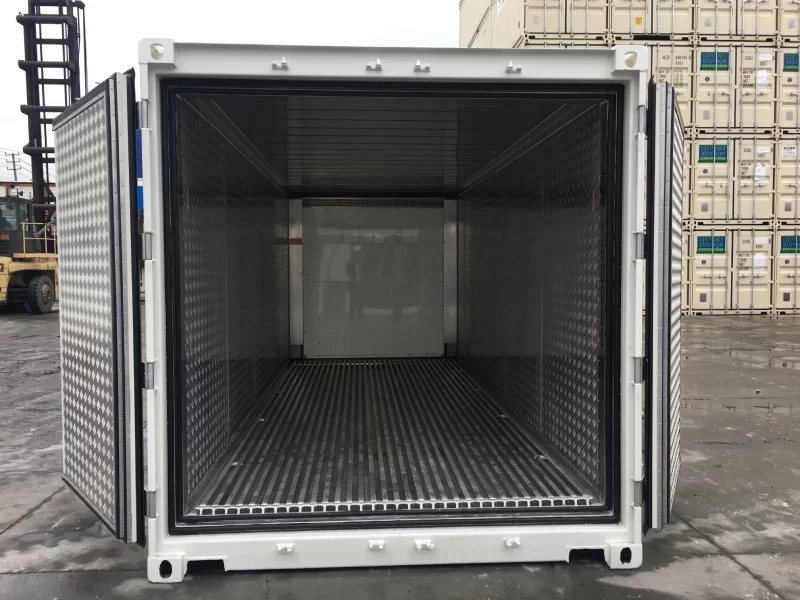
20′ Refrigerated Super Freezer Container -70°C (-94°F)
The 20′ Refrigerated Super Freezer Container is a specialized unit designed to maintain extremely low temperatures of up to -70°C (-94°F), making it suitable for storing and transporting highly sensitive goods such as vaccines, pharmaceuticals, and biological samples. These 20′ cold containers are equipped with robust insulation and advanced refrigeration technology to ensure precise temperature control and uniform cooling throughout the cargo space. The super freezer containers offer a secure environment that protects the integrity and potency of temperature-sensitive products, which is crucial in industries where maintaining strict temperature requirements is paramount. They are ideal for use in medical emergencies, research laboratories, and other applications where ultra-low temperature storage is essential for preserving product efficacy and safety.
Features
- L 20’ x W 8’ x H 8’6”
- Thermo King engine (-70°C or -94°F)
- Rubber-sealed doors
- Forklift Pockets
- Low Locking Bar Handle
- Proper insulation
- T-bar flooring
- Locking bars
- Corner castings
Specifications
| External dimensions | L 20’ x W 8’ x H 8’6” | L 6 m x W 2,4 m x H 2.6 m |
| Volume | 920 cu ft | 26 m³ |
| Tare weight | 8.0 k 070 lbs | 3.660 kgs |
| Max payload | 44.840 lbs | 20.340 kgs |
| Max cargo | 52.910 lbs | 24.00 kgs |
The Advantages of Refrigerated Containers
Reefer containers ensure precise temperature control, preserving perishables and reducing logistical costs, making them an ideal choice for businesses seeking efficient and sustainable refrigeration solutions
Temperature Control
Reefer containers offer precise temperature control, ensuring that temperature-sensitive cargo such as food, medicines, and chemicals remain within the desired temperature range throughout transport.
Versatility & Adaptability
These containers are versatile and adaptable, transporting or storing a wide range of goods, from fresh produce and frozen products to heat-sensitive items, making them suitable for various industries.
Unlocking Flexibility
Our reefer container rentals offer customizable solutions to match your project’s unique temperature-controlled requirements. Discover the benefits of renting with Container Plus.
Quality Assurance
Reefer containers meet industry standards for perishable cargo, ensuring compliance with safety and quality requirements which helps businesses maintain product integrity and meet customer expectations.
Why should you buy refrigerated containers for sale instead of renting?
Buying a refrigerated container offers long term financial savings, unlimited access without rental deadlines, and the ability to customize the unit to your exact business requirements.
Renting makes sense for brief, seasonal spikes in demand. However, continuous rental fees accumulate rapidly, surpassing the purchase price of a unit within a few years. When you buy, you secure a permanent asset. You avoid the recurring weekly or monthly charges that eat into your profit margins. Furthermore, ownership grants you total control. You can modify the interior, install custom shelving, or adjust the temperature settings at will without seeking permission from a leasing company. Our standard containers and reefers are available for outright purchase, giving you absolute operational autonomy.
Where can you order the best refrigerated containers for sale in united states?
You can order the best refrigerated containers for sale in united states directly from our inventory at Container Plus, with nationwide delivery options to your site.
We stock a diverse range of reefers across the country, ensuring you get a unit that matches your specific logistical demands. Whether you need a compact 20 foot unit for a tight urban lot or a high capacity 40 foot model for a busy distribution hub, we have you covered. Every reefer we sell undergoes a rigorous pre delivery inspection. We verify the cooling system, check the insulation integrity, and ensure the structure is cargo worthy. You can request a quote through our quotation form and our team will configure a delivery plan tailored to your location.
How does a reefer container maintain temperature?
A reefer container maintains temperature by drawing in ambient air, cooling it over evaporator coils, and circulating it throughout the insulated cargo space via an under floor duct system.
The process relies on a closed loop refrigeration cycle. The compressor pumps refrigerant gas, increasing its pressure and temperature. This hot gas then moves to the condenser, where it releases heat and condenses into a liquid. The liquid refrigerant passes through an expansion valve, dropping in pressure and temperature. As the cold refrigerant flows through the evaporator coils inside the unit, it absorbs heat from the cargo space. The internal fan blows air over these cold coils, pushing the chilled air under the floor and up through the cargo. This constant circulation maintains the set temperature, whether it is minus thirty degrees Celsius for frozen goods or plus two degrees Celsius for fresh produce.
Which technical specifications matter when you buy refrigerated containers?
When you buy refrigerated containers, focus on cooling capacity, insulation thickness, power requirements, and temperature range to ensure the unit meets your specific cargo demands.
Overlooking these specifications leads to equipment failure and spoiled cargo. You must match the reefer’s capabilities to your operational environment. For instance, operating a reefer in the extreme heat of the southern united states requires a unit with a higher cooling capacity than one used in a mild climate.
Key technical specifications to evaluate
- Temperature range: Most quality reefers operate between minus thirty and plus fifty degrees Celsius. Verify this range suits your product.
- Cooling capacity: Measured in kilowatts or BTUs, this indicates how much heat the unit can remove from the container.
- Insulation: Polyurethane foam insulation should be at least seventy five millimeters thick for optimal thermal efficiency.
- Power supply: Standard reefers require three phase power, typically four hundred sixty volts or four hundred forty volts, at sixty hertz.
- Air delivery: Look for a high cubic meters per hour airflow rating to ensure even temperature distribution.
What are the common side effects of improper reefer operation?
Improper reefer operation causes product spoilage, excessive energy consumption, and severe mechanical failures, leading to costly repairs and compromised cargo safety.
A reefer is not a magic box. It cannot reduce the temperature of warm produce efficiently. You must pre cool the cargo and the container before loading. Loading warm goods overwhelms the cooling system, causing the compressor to run continuously. This drives up energy costs and shortens the lifespan of the machinery. Additionally, blocking the airflow by stacking cargo too tightly against the walls or ceiling creates hot spots. These localized areas of warm air ruin sensitive items like pharmaceuticals or fresh seafood. Regular maintenance of the evaporator coils and condenser is mandatory. Neglecting this leads to reduced cooling efficiency and eventual system breakdown.
When should you upgrade your cold storage with a 40ft high cube reefer?
You should upgrade your cold storage with a 40ft standard shipping or high cube reefer when your current capacity restricts your business growth or your cargo volume increases significantly.
High cube reefers offer an extra foot of internal height compared to standard containers. This additional vertical space translates to more cubic meters of cargo capacity, allowing you to stack pallets higher without crushing the goods. If your current cold storage forces you to turn away orders or make multiple trips, a larger unit solves the problem. A single forty foot high cube reefer can hold over twenty eight metric tons of cargo. Consolidating your shipments into one larger container reduces per unit transportation costs and streamlines your logistics.
How to prepare your site for a refrigerated container delivery?
Preparing your site for a refrigerated container delivery requires a level, weight bearing surface and a dedicated power source compatible with the units electrical specifications.
These units are heavy. A standard forty foot reefer weighs over four thousand kilograms empty. When loaded, the weight increases dramatically. You must ensure the ground can support this load without sinking. Paved surfaces like concrete or asphalt are ideal. If you place the container on dirt or gravel, use heavy duty wooden blocks under the corner castings to distribute the weight and prevent settling.
Electrical requirements
Reefers require a robust and stable electrical connection. You cannot run a reefer on a standard household outlet.
- Voltage: Most units require three phase power.
- Amperage: Ensure your circuit breaker can handle the startup amperage, which is significantly higher than the running amperage.
- Cable sizing: Use appropriately gauged cables to prevent voltage drop, which can damage the compressor.
- Generator power: If grid power is unavailable, you need a generator that provides clean, stable power.
What is the legal status and compliance for reefers in the united states?
The legal status and compliance for reefers in the united states involve strict adherence to food safety modernization act regulations, environmental protection agency refrigerant rules, and department of transportation road standards.
Compliance is not optional. The food safety modernization act (FSMA) mandates strict sanitary transportation practices. Your reefer must be capable of maintaining the required temperature throughout the journey, and you must keep verifiable records proving compliance. Modern reefers feature data loggers that record temperature, humidity, and airflow at set intervals. You must retain these records to satisfy regulatory audits.
The environmental protection agency (EPA) regulates the refrigerants used in these units. Older reefers used refrigerants with high global warming potential (GWP). Current regulations require the use of approved, lower GWP refrigerants. When purchasing a unit, verify the refrigerant type complies with current EPA standards. Furthermore, if you plan to transport the container on public roads, the unit must meet all department of transportation (DOT) structural and operational requirements for intermodal shipping.
Comparison of our refrigerated container options
| Container type | External length | Internal height | Temperature range | Best application |
|---|---|---|---|---|
| 20ft standard reefer | 6.058 meters | 2.385 meters | Minus 30 to plus 50 Celsius | Small volume cold storage, urban delivery |
| 40ft standard reefer | 12.192 meters | 2.385 meters | Minus 30 to plus 50 Celsius | High volume transportation, warehouse overflow |
| 40ft high cube reefer | 12.192 meters | 2.697 meters | Minus 30 to plus 50 Celsius | Maximum capacity, lightweight high volume cargo |
| Mini containers reefer | Custom lengths | Custom heights | Custom ranges | Specialized small footprint cold storage |
Why choose our company for your cold chain logistics?
We supply cargo worthy, inspect reefer units backed by transparent service, ensuring your cold chain logistics remain unbroken and your investments are secure.
Our team at Container Plus does not simply sell steel boxes. We provide climate controlled solutions that protect your valuable cargo. We thoroughly inspect every cooling unit, checking the compressor, evaporator, and condenser coils before the container leaves our yard. We verify the integrity of the door seals and the thickness of the insulation. We also offer side opening containers for specialized loading requirements. Our commitment to quality means you receive a unit ready for immediate deployment. Check our reviews to see how we support our clients, and feel free to contact us for personalized assistance.
Key takeaways
- Ownership pays off: Buying a reefer container saves money over time compared to continuous rental payments.
- Temperature control is critical: Pre cooling cargo and maintaining proper airflow prevents spoilage and equipment strain.
- Site preparation is mandatory: Ensure you have a level surface and the correct three phase power supply before delivery.
- Compliance protects your business: Adhering to FSMA and EPA regulations prevents fines and protects consumer safety.
- Technical specs matter: Match the cooling capacity and dimensions of the reefer to your specific logistical needs.
Frequently asked questions
What is the difference between a reefer and a standard container?
A reefer has an integrated refrigeration unit and insulated walls, while a standard container lacks cooling equipment and insulation.
Can a refrigerated container operate without external power?
No, a refrigerated container requires a continuous external power source, either from a grid connection or a generator, to run the cooling system.
How much does it cost to run a refrigerated container?
Running costs vary, but a typical reefer consumes about four to eight kilowatts per hour, translating to a significant monthly electricity bill depending on local rates and set temperatures.
What cargo can you store in a refrigerated container?
You can store perishable food, pharmaceuticals, chemicals, and electronics, as long as the items require a controlled temperature environment to remain stable.
Do you offer delivery for refrigerated containers?
Yes, we provide nationwide delivery logistics, ensuring your purchased reefer arrives safely at your specified location, ready for immediate power up and use.
References
- Food and Drug Administration FSMA Sanitary Transportation Rules
- EPA Refrigerant Regulations and Phaseout
- Thermo King Reefer Specifications and Operation
- Carrier Transicold Refrigeration Systems
- Institute of Food Technologists Cold Chain Best Practices
- Department of Transportation Intermodal Shipping Standards
- Container Plus Refrigerated Container Solutions